
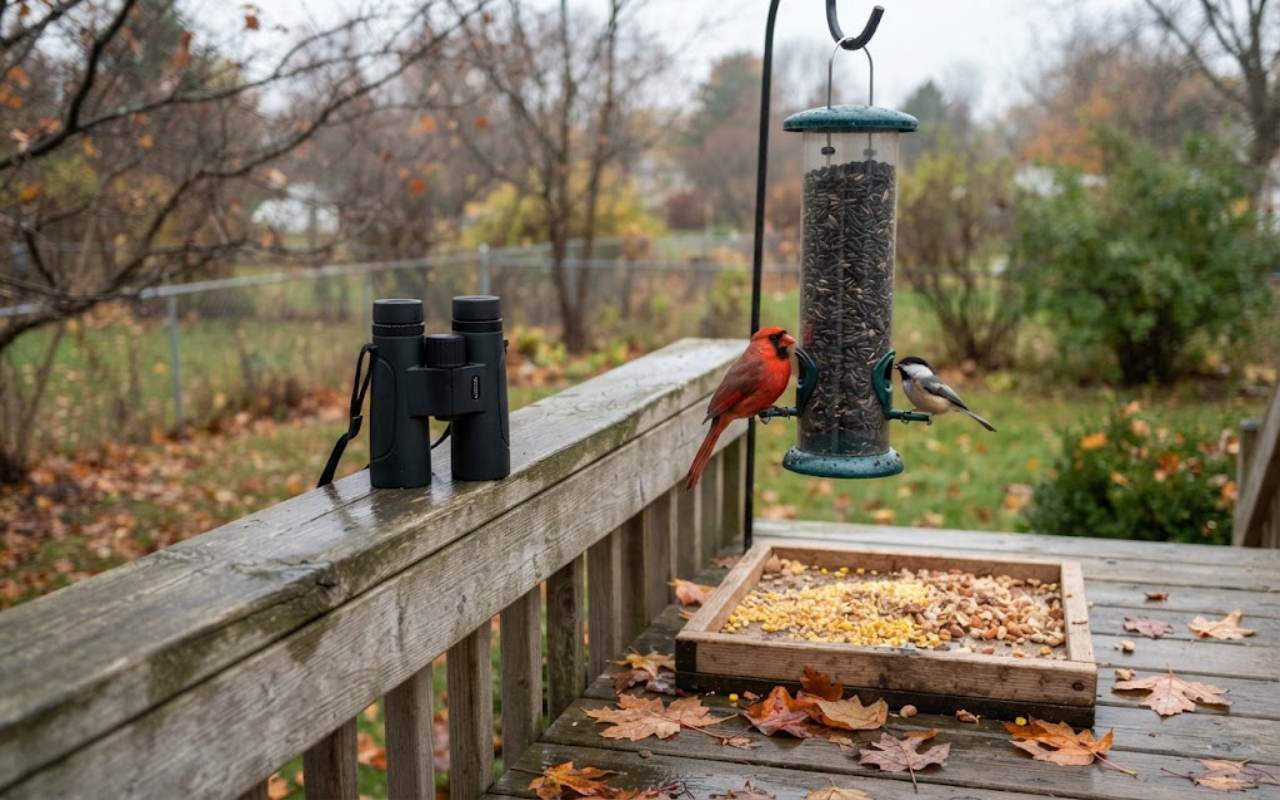
Establishing a precise autumn bird feeder schedule ensures migratory species maintain essential lipid reserves while preventing seasonal pathogens from contaminating your backyard feeding stations. Autumn brings dramatic swings in ambient temperature, moisture levels, and pest behavior that quickly turn unmanaged stations into biological hazards.
Following a rigid schedule allows you to coordinate fuel density with actual metabolic demands as natural insect and seed availability declines. Understanding the shifting nutritional needs of transient and resident birds turns erratic backyard feeding into an effective conservation effort.
Quick-Glance Field Summary
This operational timetable synchronizes seasonal diet transitions, thermal management, and hardware maintenance across three distinct autumn phases. Follow the benchmark parameters below to maintain food safety and equipment integrity throughout the entire season.
- September nectar ratio: 4:1 water-to-sucrose boiling baseline, sanitized every 48 to 72 hours
- October seed transition: Minimum 70 percent high-oil black sunflower seed and unsalted shelled peanuts
- November freeze mitigation: Maintain 4:1 nectar with external heat; use 3:1 only as a temporary freeze-defense fallback
- Hardware clearance: Baffle placement at a minimum of 5 feet high and 10 feet out from launching perches
- Glass impact mitigation: Feeders placed within 3 feet of windows or beyond 30 feet
September Nectar Calibration and Wasp Deterrence Protocols
September marks a critical hyperphagia window for southward migrants like Ruby-throated hummingbirds, but it also brings peak aggressive insect foraging. A widespread issue highlighted by contributors on r/backyardbirds involves yellowjackets and bald-faced hornets monopolizing nectar ports as natural floral resources dry up.
Community members frequently report that removing bright yellow feeder components or switching to saucer-style feeders with deep recessed wells immediately disrupts wasp feeding while accommodating avian bill lengths.
Standard 4:1 water-to-white-sugar solutions remain mandatory during the early weeks of the month. Avoid commercial red dyes and never boil honey or artificial sweeteners into the mixture, as these create toxic chemical compounds.
Fungal pathogens such as Candida albicans multiply rapidly in ambient temperatures above 70 degrees Fahrenheit, requiring a complete feeder flush every two to three days.
- Pure sucrose solution ratio: 4 parts clean water to 1 part pure granulated white cane sugar
- Disinfection standard: Soak dismantled parts in a 1:9 bleach-to-water dilution for 15 minutes
- Equipment thermal safety: Wash polycarbonate plastic reservoirs in warm water, never boiling water, to prevent structural warping
Inspect avian tongue mechanics when monitoring nectar intake during peak September migration. Hummingbirds rely on rapid fluid capture via the elastic groove trapping mechanism of their grooved tongues, which can be impaired by fungal tongue swelling from dirty ports.
Clear, clean, and properly calibrated feeders keep transient birds fueled for thousands of miles of sustained migratory flight.
| Calendar Phase | Target Avian Migrants | Primary Core Fuel Requirements | Feeder Station Architecture |
|---|---|---|---|
| Early Fall (Sept) | Warblers, orioles, tanagers, and early hummingbirds. | Fresh fruits, live mealworms, and a standard 4:1 sugar-water nectar solution. | Shallow tray feeders and orange half-spheres hung in shaded tree canopies. |
| Mid-Fall (Oct) | Grosbeaks, native sparrows, finches, and robins. | High-lipid black oil sunflower seeds, pure safflower, and raw peanuts. | Elevated polycarbonate hoppers paired with a low ground platform wood tray. |
| Late Fall (Nov) | Chickadees, nuthatches, woodpeckers, and juncos. | No-melt beef tallow suet cakes, nyjer thistle, and raw cracked corn grains. | Heavy-gauge steel wire cages suspended beneath wide protective domes. |
October Lipid Ramping and High-Energy Seed Transitions
As natural invertebrate populations plummet in October, seed-eating species require rapid shifts toward calorie-dense fats to sustain overnight thermoregulation. A frequent oversight shared on r/birdwatching involves hobbyists continuing to offer high-millet bargain blends, which ground-feeding migrants kick aside in favor of lipid-dense selections.
Discarded low-grade seed rapidly forms a sodden mat beneath the feeding station, fostering damp ground molds under fallen autumn leaves. Replace low-fat carbohydrate mixes with pure black oil sunflower seeds, striped sunflower, and shelled peanut halves.
Black oil sunflower seeds possess thin hulls that small passerines like chickadees and nuthatches can easily crack, yielding high oil content with minimal energy expenditure. Introduce raw suet blocks inside wire cages once daytime temperatures consistently drop below 50 degrees Fahrenheit.
- High-lipid baseline: Black oil sunflower seeds offering over 25 percent crude fat content
- Selective caching option: Whole or halved unsalted peanuts positioned in dedicated mesh tube feeders
- Suet temperature threshold: Deploy only when ambient high temperatures stay strictly under 50 degrees Fahrenheit
Raw beef suet softens and turns rancid when exposed to early autumn heat. Smearing suet can also transfer onto avian flight feathers, degrading their waterproofing and natural insulating properties. Keeping suet firm protects plumage and delivers vital fuel for local winter residents.
Autumn Moisture Mitigation and Aflatoxin Prevention Tactics
Autumn rains create a hazardous microclimate inside enclosed hopper and tube feeders. When moisture breaches the reservoir, the mold fungus Aspergillus flavus grows rapidly on damp grains, producing dangerous aflatoxins that can cause acute toxicity and mortality in songbirds.
Reddit forum hobbyists often emphasize that traditional wooden hoppers trap moisture along seams, creating persistent contamination hotbeds during damp weather.
Protecting seed supplies requires physical barriers against heavy precipitation. Install broad polycarbonate weather domes directly above tube feeders to shield feeder ports from driven rain. Modify open trays with mesh hardware cloth to ensure water drains freely without pooling around uncracked seeds.
- Weather baffle span: Wide 12-inch or 18-inch polycarbonate weather domes positioned 2 to 4 inches above ports
- Tray drainage standard: 0.25-inch galvanized hardware cloth inserts to allow passive drainage
- Sanitation frequency: Complete disassembly, scrub, and drying routine every 14 days during wet cycles
Never apply chemical fungicides, mineral oils, or non-stick hydrophobic sprays to feeder housings. Instead, adjust food volume during prolonged rain events to provide only what your flock consumes within 24 hours. Daily smaller feedings eliminate standing moisture and prevent mold before it can take root.
November Thermal Freeze Defense and Late Nectar Density Adjustments
November brings freezing overnight temperatures that turn traditional wildlife solutions into solid ice. A standard 4:1 hummingbird nectar solution starts to slush and freeze solid at approximately 27 degrees Fahrenheit (-2.8 degrees Celsius).
For areas with lingering late-season or overwintering species, such as Anna’s hummingbirds on the Pacific coast, keeping this fluid resource accessible requires careful, avian-safe intervention.
While a temporary increase to a 3:1 sugar-to-water formulation can safely lower the freezing threshold to roughly 22 degrees Fahrenheit during an extreme cold snap, it should not be used as a permanent seasonal baseline. Prolonged exposure to high sucrose concentrations can cause dehydration and liver strain if birds lack access to open, unheated water sources.
The safest methodology to combat freezing is applying external, localized warmth while keeping the standard 4:1 mixture intact. Ensure that you never add glycerin or alcohol to nectar solutions; these compounds damage digestive tracts, ruin feather insulation, and cause fatal hypothermia.
- Standard winter nectar ratio: 4 parts clean water to 1 part granulated sugar to protect renal health.
- Artificial heat application: Affix a specialized incandescent 7-watt outdoor feeder heater or insulated heating pad beneath the basin to prevent crystallization.
- Freeze-defense fallback: Utilize a 3:1 ratio strictly during temporary, severe sub-freezing events, switching back to a 4:1 blend once conditions stabilize.
Inspect heated water sources daily to confirm heating elements are functioning properly. Birds require liquid water for both drinking and feather preening throughout freezing spells, making clean open water as vital as supplemental calories.
Keep basins clear of surface ice so visiting birds do not deplete vital metabolic energy searching for open water.plemental calories. Keep basins clean and clear of surface ice so visiting birds do not deplete energy searching for open water.
Spatial Yard Geometry and Window Collision Safeguards
Thinning autumn canopies dramatically increase reflection hazards on residential windows. Fall territorial dispersals and migratory routes bring unfamiliar birds through backyards at high flight speeds. According to Audubon field guidelines, feeders must be situated within 3 feet of exterior window glass or moved beyond 30 feet away to mitigate lethal collisions.
Feeders placed within 3 feet do not permit birds to attain lethal flight velocity if they flush suddenly into the glass. Conversely, feeders positioned beyond 30 feet give birds sufficient space to identify the glass surface and maneuver clear of structures.
Pair this placement with external collision films, paracord zen curtains, or closely spaced visual markers to break up window reflections.
- Strike safety zones: Mount units within 0 to 3 feet from glass, or position them 30 feet or more away
- Mammalian baffle elevation: Mount post baffles 4 feet off the ground and 10 feet out from jumping perches
- Debris zone clearing: Rake and remove discarded seed hulls from beneath feeder stations weekly
Rodent activity surges in November as natural food caches deplete across local green spaces. Raking away decomposing seed hulls beneath hanging stations removes scent trails that draw unwanted rodents to the area.
Careful spatial planning and regular maintenance create a safe, reliable autumn feeding station that supports local and migratory bird populations through the winter.